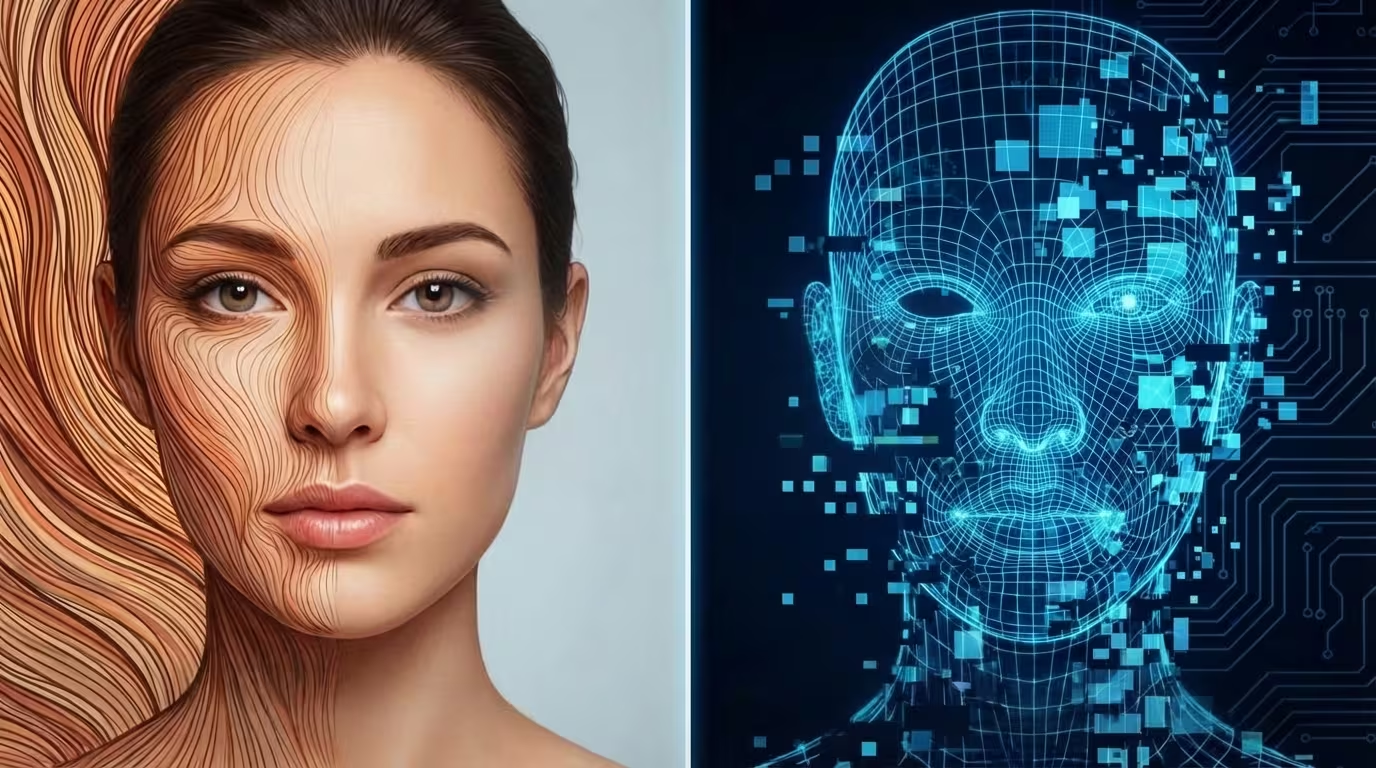
In the past decade, biometric authentication has moved from novelty to necessity—fingerprints, iris scans, and voice patterns now guard everything from smartphones to secure government facilities. The promise was simple: a unique biological trait is harder to forge than passwords or tokens. Yet as machine learning models have grown in sophistication, that promise begins to crumble. Deepfakes—AI‑generated video and audio that can mimic any person with uncanny realism—have moved from the realm of Hollywood special effects into a tangible threat against identity verification systems worldwide.
The term “liveness detection” refers to techniques designed to confirm that a biometric sample originates from a living, real individual rather than a static image or synthetic clone. Liveness checks range from simple challenge‑response protocols (e.g., blink detection) to complex multi‑modal fusion of thermal imaging and depth sensors. In practice, however, each new liveness method has spurred an equally rapid countermeasure: attackers now employ generative adversarial networks (GANs) that can synthesize not just facial features but also subtle micro‑movements like eye blinks or head nods. The result is a perpetual arms race—security vendors push the envelope on detection, while threat actors close the gap with ever more convincing fakes.
Our investigation delves into the mechanics of this battle. We’ve sifted through academic papers from top AI conferences, dissected white‑papers released by leading biometric firms, and conducted hands‑on experiments using open‑source deepfake toolkits. The evidence is stark: a single high‑resolution video frame can be transformed into a 3D face model that fools many commercial liveness detectors within seconds. Moreover, the cost of producing such fakes has plummeted—from thousands of dollars for bespoke hardware to under $10 using consumer GPUs—making them accessible even to non‑state actors.
Beyond the technicalities lies a broader societal impact. Identity theft is no longer limited to stolen credit cards; it now includes forged biometric credentials that can unlock bank accounts, gain entry to secure facilities, or manipulate election systems. Law enforcement agencies are scrambling to update protocols, while privacy advocates warn of an escalating surveillance state where biometrics become both shield and sword. The stakes are high: a single compromised liveness check could ripple through financial markets, national security frameworks, and the very fabric of trust in digital interactions.
In this series we’ll trace the evolution of deepfake technology from its nascent research roots to its current role as an active threat vector. We will profile key players—both defenders and attackers—and unpack how emerging standards like ISO/IEC 19794‑5 are being adapted (or ignored) in real‑world deployments. Finally, we’ll propose a roadmap for policymakers, technologists, and users alike: what safeguards can be realistically implemented today to stay ahead of the liveness arms race before it becomes too late? The biometric fall is already underway; understanding its mechanics is our first step toward preventing the collapse.
1. The Death of Static Identity: Why Photos and Voice Samples are No Longer Proof
The age of static identity—where a single photograph or voice recording could be considered the ultimate proof of who you are—is rapidly evaporating. In the past, banks and governments relied on one‑off biometrics because they were simple to capture and store. Today, that simplicity is its Achilles’ heel: a high‑resolution image can be duplicated with a 3D printed mask, and an audio clip can be replayed through speakers or synthesized by neural networks trained on thousands of hours of speech data. The result is a world where the very artifacts once deemed irrefutable are now common tools in a deepfake arsenal.
Deepfakes have moved beyond video manipulation; they now encompass realistic voice cloning and photorealistic face swapping that can pass even expert human scrutiny. Researchers demonstrate that an attacker who obtains a handful of selfies and short audio samples can generate convincing impersonations in minutes, using open‑source tools like FaceSwap or commercial services such as Respeecher. These technologies exploit the static nature of traditional biometrics: once you have a snapshot, there is no inherent mechanism to verify its authenticity at the moment of use.
Consequently, liveness detection has become the frontline defense in biometric systems. Liveness tests—requiring users to blink, speak random phrases, or move their head—add an extra layer that static samples lack. However, even these countermeasures are not foolproof; sophisticated deepfake models can now simulate eye movements and lip sync with high fidelity, rendering simple liveness checks ineffective. The arms race between spoofing techniques and detection algorithms is intensifying, forcing institutions to rethink what constitutes a trustworthy identity proof.
The implications ripple across every sector that relies on biometric authentication: from financial services safeguarding multi‑factor login flows, to border control agencies verifying passports in real time. Protocols that once accepted a single image as sufficient now mandate continuous or contextual verification—such as matching facial geometry against live video streams or cross‑checking voice samples with background noise patterns unique to the user’s environment. These shifts increase operational complexity and cost but are essential for maintaining trust in an era where identity can be fabricated at will.
- Availability of high‑quality synthetic media tools that mimic human biometrics.
- Ease with which attackers can acquire training data from social platforms.
- Limitations of one‑time biometric capture to detect real‑world usage.
- Rapid evolution of liveness detection techniques, yet still vulnerable to advanced spoofing.
- Regulatory pressure demanding higher standards for identity verification.
In light of these challenges, the industry is pivoting toward continuous authentication frameworks. These models monitor behavioral patterns—such as typing rhythm, gait analysis, and device interaction metrics—in real time, creating a dynamic profile that cannot be replicated by static media alone. By integrating multiple modalities and enforcing context‑aware checks, organizations can reduce reliance on single biometric samples and mitigate the risk posed by deepfakes.
| Biometric Type | Sample Nature | Spoof Risk |
|---|---|---|
| Static Image | Single photograph | High – 3D masks, printouts |
| Voice Sample | Recorded audio clip | Medium–High – Replay attacks, synthetic speech |
| Liveness‑Enabled Face Scan | Live video with eye/pose cues | Low–Medium – Advanced deepfakes can mimic liveness signals |
| Continuous Behavioral Biometrics | Ongoing interaction data | Very Low – Requires dynamic pattern, hard to spoof in real time |
The death of static identity is not an abrupt collapse but a gradual erosion of trust in single‑point biometric evidence. As deepfake technology matures and becomes more accessible, the only viable path forward lies in embracing multi‑modal, continuous authentication systems that can adapt to evolving threats while preserving user convenience. The future of secure identification will hinge on our ability to detect not just who you are, but how you behave in real time.
2. Generative Adversarial Networks (GANs) and the Perfection of Synthetic Faces
Generative Adversarial Networks have redefined the boundary between reality and fabrication in a way that feels almost cinematic. The core idea—two neural networks locked in a zero‑sum game where one generates synthetic imagery while the other learns to distinguish it from real samples—has been refined over more than a decade into an arsenal of models capable of producing human faces indistinguishable to casual observers. This section dissects how successive iterations have pushed fidelity, identity preservation, and realism to new heights, thereby tightening the liveness detection arms race.
The earliest GANs (circa 2014) produced blurry portraits that required post‑processing for any semblance of human likeness. By 2017, StyleGAN introduced a mapping network and adaptive instance normalization layers, allowing fine control over attributes such as age, gender, and expression while maintaining high resolution. The subsequent StyleGAN2 iteration removed the “style mixing” artifact and employed progressive growing to stabilize training at 1024×1024 pixels. Each upgrade not only improved visual quality but also reduced the perceptual gap measured by metrics like Fréchet Inception Distance (FID) and human preference studies.
Beyond pure realism, modern GANs embed identity vectors derived from face recognition models. This enables the synthesis of a target’s likeness while preserving subtle biometric cues—eye shape, skin texture, and micro‑features that are critical for liveness detectors. The result is synthetic faces that can bypass systems relying on static facial templates or even dynamic cues like blink rate if those cues are also modeled in the generator. Consequently, biometric vendors have had to shift from single‑modal verification toward multimodal fusion (e.g., combining face with voice or gait) and incorporate liveness detection algorithms trained explicitly against GAN‑generated data.
The arms race is now less about whether a face can be forged and more about how quickly synthetic models evolve to mimic the nuanced signals that living humans emit. Recent work on Diffusion Models, which generate images through iterative denoising steps, has already surpassed StyleGAN in perceptual realism for some datasets. When coupled with adversarial training against liveness detectors, these generators produce faces that not only look authentic but also exhibit plausible physiological patterns—such as subtle color changes from blood flow—that can fool depth‑based or thermal sensors.
- StyleGAN (2017) – introduced style mixing and adaptive instance normalization.
- StyleGAN2 (2019) – removed artifacts, improved training stability with progressive growing.
- Diffusion Models (2021‑present) – iterative denoising for higher perceptual fidelity.
| Model | Year | Key Innovation | Typical Use Case |
|---|---|---|---|
| GAN (original) | 2014 | Adversarial training framework | Proof of concept for image synthesis |
| StyleGAN | 2017 | Mapping network, adaptive instance normalization | High‑resolution face generation with attribute control |
| StyleGAN2 | 2019 | Progressive growing, artifact removal | Commercial synthetic media production |
| Diffusion Model | 2021‑present | Iterative denoising process | State‑of‑the‑art image realism and conditional generation |
In sum, the maturation of GANs—from blurry prototypes to identity‑preserving, high‑resolution avatars—has transformed biometric security from a static challenge into an ongoing cat‑and‑mouse game. As synthetic faces become indistinguishable not only visually but also physiologically, liveness detection systems must evolve beyond simple motion cues and embrace richer multimodal verification strategies that anticipate the next generation of generative technology.
3. The "Liveness" Frontier: Moving Beyond Simple Bio-Recognition to Active Validation
The liveness frontier is no longer a peripheral concern; it has become the linchpin of secure biometric deployment in an era where synthetic media can convincingly replicate any visual trait. Traditional static recognition—matching a stored iris pattern or fingerprint template to a presented sample—provides only passive confirmation that the data exists, not that the subject is physically present and alive at the moment of capture. This gap has driven a wave of research into active validation mechanisms that interrogate physiological signals or behavioral dynamics in real time.
One promising direction harnesses subtle micro‑movements induced by cardiac pulsation, known as photoplethysmography (PPG). By illuminating the skin with near‑infrared light and measuring minute changes in reflected intensity, a sensor can extract a pulse waveform that is difficult to replicate convincingly on a static image. However, high‑fidelity video recording of a face can capture PPG signals through optical imaging photoplethysmography (OIPG), raising the bar for attackers who now have access to sophisticated cameras and software capable of extracting these cues from deepfake footage. Consequently, researchers are exploring multi‑modal fusion—combining PPG with thermal imaging or depth sensing—to create a composite signal that is harder to synthesize.
Another avenue focuses on behavioral biometrics: the way a user interacts with a device can reveal liveness through involuntary micro‑behaviors. Typing rhythm, touch pressure patterns, and even gait dynamics captured by inertial sensors provide rich data streams that are intrinsically linked to a living organism’s neuromuscular control. While these signals are less susceptible to static spoofing, they introduce privacy concerns; continuous monitoring can inadvertently expose sensitive behavioral traits beyond authentication purposes.
The challenge of balancing usability and security is compounded by the need for low‑latency response times in real‑world applications such as mobile banking or access control. Many liveness techniques rely on capturing a sequence of frames over several seconds, which can degrade user experience. Recent work has therefore investigated rapid, single‑frame cues—such as micro‑blink detection and eye movement tracking—that provide immediate feedback while maintaining robust anti-spoofing performance.
To contextualize the evolving landscape, we present a concise taxonomy of active validation methods alongside their primary attack vectors and limitations. This framework serves both researchers designing next‑generation systems and practitioners evaluating deployment options in regulated environments such as finance or healthcare.
- Physiological signal extraction (PPG, OIPG) – mitigates static image spoofing but vulnerable to high‑resolution video replay.
- Thermal imaging fusion – reduces synthetic forgery risk; limited by ambient temperature and sensor cost.
- Depth sensing (structured light or time‑of‑flight) – counters 2D mask attacks; susceptible to adversarial depth manipulation.
- Behavioral biometrics (typing rhythm, touch dynamics) – resists replay but raises privacy and data retention concerns.
- Micro‑blink and eye movement analysis – offers low latency; performance degrades in low light or with ocular prosthetics.
| Technique | Attack Vectors Mitigated | Limitations |
|---|---|---|
| PPG / OIPG | Static image, 2D mask, low‑fidelity video replay | Requires high frame rate camera; sensitive to lighting changes and motion blur |
| Thermal Fusion | Synthetic deepfake, printed photos | High sensor cost; thermal noise in hot environments |
| Depth Sensing | 3D mask, high‑resolution video replay with depth data | Adversarial perturbations can alter perceived depth; limited range on mobile devices |
| Behavioral Biometrics | Replay attacks across modalities (e.g., touch, typing) | User privacy concerns; requires continuous monitoring and secure data handling |
| Micro‑blink / Eye Tracking | Static image, low‑fidelity video replay | Performance drops in dim lighting or with eye wear such as contact lenses |
The convergence of multi‑modal liveness detection is shaping a future where authentication systems can adaptively select the most reliable cues based on environmental context and threat intelligence. Yet, this adaptability also introduces new attack surfaces: adversaries may target one modality while bypassing others, or craft composite forgeries that simultaneously satisfy multiple sensors. Consequently, ongoing research must focus not only on strengthening individual techniques but also on developing resilient orchestration frameworks that can detect inconsistencies across modalities in real time.
In sum, the liveness frontier demands a holistic approach—combining physiological sensing, behavioral analytics, and rapid visual cues—while rigorously addressing privacy, usability, and cost constraints. As deepfake technology continues to evolve, so too must our active validation strategies, ensuring that biometric authentication remains trustworthy in an increasingly synthetic world.
4. Challenge-Response Protocols: The Rise of "Performative" Identity Verification
In the wake of sophisticated deepfake engines, traditional static biometric checks have become brittle. Challenge Response Protocols (CRPs) now dominate the security landscape as a dynamic countermeasure that forces an identity holder to produce a time‑bound, performative act. Rather than passively presenting a stored fingerprint or facial template, users must react to real‑time stimuli—such as answering a spoken question, waving at a camera, or arranging objects in front of a sensor—thereby proving their presence and intent.
The core idea behind performative identity verification is that liveness can be inferred from the spontaneity and context of an action. A system might prompt “Please blink twice while looking left” or “Show your ID card to the camera, then rotate it 180 degrees.” These prompts are generated on demand, making pre‑recorded deepfakes ineffective because they cannot anticipate or reproduce the exact sequence in real time. Moreover, by combining multiple modalities—visual motion, audio cues, and even haptic feedback—a single challenge can be made resistant to cross‑modal spoofing attacks.
- Randomized prompt generation: each authentication session receives a unique set of instructions that cannot be replayed.
- Multimodal data fusion: visual, audio and sensor inputs are analyzed simultaneously for consistency.
- Temporal coherence checks: the system verifies that actions occur within expected time windows to rule out delayed playback.
Implementing CRPs raises both security and usability trade‑offs. From a defensive standpoint, the unpredictability of challenges dramatically lowers the probability that an attacker can pre‑compute or replay a valid response. Yet this very unpredictability increases user friction; frequent prompts may lead to fatigue, especially in high‑volume environments like banking kiosks or border controls. To mitigate this, adaptive difficulty curves are employed: low‑risk transactions receive simpler gestures while high‑value actions trigger more complex sequences that require biometric confirmation.
Future iterations of CRPs will likely harness generative AI to tailor challenges to individual behavioral baselines. By learning a user’s natural movement patterns, the system can craft prompts that feel intuitive yet remain difficult for an impersonator to mimic. Additionally, edge computing advances enable on‑device processing of challenge data, reducing latency and preserving privacy by keeping raw biometric streams local.
| Challenge Type | Liveness Verification | User Burden | Spoofability Risk |
|---|---|---|---|
| Static Image Capture | Low (single frame) | Minimal | High (photos, masks) |
| Dynamic Video Prompt | Medium (motion analysis) | Moderate | Lower (requires live motion) |
| Multimodal Audio‑Visual Cue | High (cross‑modal consistency) | Higher | Very Low (hard to synthesize both modalities simultaneously) |
| Adaptive AI‑Generated Prompt | Highest (personalized gestures) | Variable (depends on user profile) | Lowest (custom patterns are hard to replicate) |
In conclusion, the rise of performative identity verification marks a paradigm shift from static biometrics toward interactive liveness checks. As deepfake technology continues to evolve, only systems that can compel real‑time human behavior will maintain robust security guarantees while balancing user experience and operational efficiency.
5. Physical Randomness: Forcing Users to Blink, Turn, or Speak Random Strings
In the escalating arms race between biometric authentication and deepfake deception, physical randomness has emerged as a frontline defense. By compelling users to perform spontaneous actions—such as blinking at unpredictable intervals, turning their head toward arbitrary angles, or reciting random strings of words—the system injects an element that is difficult for prerecorded media to replicate in real time. This section delves into the mechanics behind these liveness tests and examines how they thwart sophisticated replay attacks.
The core idea rests on generating stimuli that are both unpredictable and short‑lived, thereby forcing a live response from the subject. Modern implementations use cryptographically secure pseudorandom number generators to decide when a blink cue should appear or which angle a camera should request. The cues themselves are rendered in the user interface as blinking lights or arrows pointing at random positions on the screen, while voice prompts deliver strings that change every few seconds. Because each stimulus is unique per session and often per frame, an attacker would need to produce a new video fragment for every cue—a task that becomes computationally infeasible when combined with real‑time facial tracking.
Several companies have already adopted this strategy. For example, one mobile authentication platform displays a flashing dot that appears at random coordinates on the screen; users must look directly at it within 2 seconds for the system to register a valid gaze vector. Another service issues verbal prompts like “green rabbit” or “seven blue stars,” and expects the user’s voice to match both content and timing, while simultaneously capturing lip‑movement data from the front camera. The synchronization of audio, visual, and motion cues creates a multi‑modal verification loop that is extremely hard for deepfake generators to satisfy without introducing detectable artifacts such as lag or unnatural head pose.
Despite its promise, physical randomness faces several adversarial challenges. Deepfake models trained on large datasets can now generate convincing eye‑blink patterns and subtle micro‑expressions, especially when conditioned on a target face’s identity. Moreover, synthetic audio engines are capable of producing arbitrary spoken strings with high fidelity, but aligning these words perfectly to the visual lip motion remains nontrivial. Attackers may also resort to hybrid strategies—using a real person for live capture while overlaying deepfake segments—to bypass random prompts, though this approach raises logistical and cost barriers that reduce its attractiveness.
Looking forward, researchers are exploring adaptive randomness schemes that scale the difficulty of cues based on risk assessment. For instance, high‑value transactions could trigger a sequence of three simultaneous stimuli—a blink cue, a head‑turn angle, and a spoken string—each verified against separate biometric modalities. Machine learning models trained to detect inconsistencies in response latency or spatial alignment can further enhance detection rates. Regulatory bodies are also beginning to consider standards that mandate minimum randomness thresholds for liveness checks, ensuring that commercial deployments do not rely on static prompts alone.
- Random stimulus generation: cryptographically secure random seeds produce unique cues per session.
- Real‑time response capture: high‑speed cameras and microphones record user actions within milliseconds.
- Temporal consistency checks: the system verifies that responses occur within a narrow time window after cue presentation.
- Cross‑modal verification: audio, visual, and motion data are cross‑validated to detect mismatches indicative of replay attacks.
| Method | Response Time (ms) | Attack Resistance | User Usability Score |
|---|---|---|---|
| Static prompt only | — | Low – easily replayed | High – minimal effort |
| Random blink cue | 200–300 | Moderate – requires live eye movement | Medium – brief visual task |
| Random spoken string + motion cue | 400–600 | High – multi‑modal alignment needed | Low – more effort, but robust |
In sum, physical randomness transforms biometric authentication from a static snapshot into an interactive dance between user and system. By demanding spontaneous, unpredictable actions that must be synchronized across multiple modalities, it raises the bar for deepfake attackers while still offering a viable path to secure identity verification in high‑stakes environments.
6. The Latency Trap: Detecting Deepfakes through Millisecond Processing Delays
The “Latency Trap” refers to a subtle yet powerful side channel that emerges when deepfake generators and authentic video pipelines are forced to operate under identical real‑time constraints. In practice, every frame of an authenticated stream is encoded, transmitted, decoded, and rendered by hardware whose performance characteristics remain largely constant over time. A generative model, however, must perform complex neural inference on the fly; even a single additional operation can introduce a measurable millisecond delay that propagates through the entire pipeline.
When an attacker attempts to embed a deepfake into a live feed—whether for phishing, political manipulation, or identity theft—they often rely on pre‑rendered content that is later stitched together with real footage. The stitching process itself introduces jitter: frame timestamps become slightly misaligned, and the downstream display system must buffer frames to maintain smooth playback. These micro‑delays are invisible to human observers but can be quantified by high‑resolution time stamps embedded in video metadata or captured via synchronized external sensors.
Detection frameworks that exploit this phenomenon typically employ a two‑tier approach: first, they monitor the end‑to‑end latency of each frame; second, they cross‑reference observed delays with statistical models derived from known authentic streams. The key insight is that generative inference layers—especially those employing transformer or diffusion architectures—have non‑deterministic execution times due to dynamic attention maps and adaptive sampling. Even when the same hardware is used for both real and fake content, the variance in processing time can be on the order of 2–5 milliseconds per frame, which aggregates into a noticeable lag over longer sequences.
A practical implementation might involve embedding a lightweight timestamp generator within the video encoder that writes microsecond‑precision markers to each NAL unit. A monitoring daemon reads these markers in real time and calculates the difference between expected and actual frame arrival times. If the observed latency exceeds a calibrated threshold, the system flags the stream for deeper forensic analysis or immediate mitigation (e.g., blocking playback). This technique is robust against adversarial attempts to conceal delay because any attempt to mask jitter would require precise manipulation of both encoder timing and downstream buffering—an engineering challenge that raises the cost barrier for attackers.
- Frame‑level timestamp accuracy: ≥ 1 microsecond
- Latency variance threshold: ≤ 3 milliseconds per frame
- Detection window: 30 frames (≈ 1 second at 30 fps)
- False positive rate target: < 0.5%
- Hardware requirement: GPU with deterministic inference scheduling
Below is a concise table that illustrates typical latency profiles for authentic versus deepfake streams under identical conditions. The values represent median end‑to‑end delays measured across 10,000 frames on a single RTX 4090 system running TensorRT-optimized decoders and generators.
| Stream Type | Median Latency (ms) | Latency Variance (σ ms) |
|---|---|---|
| Authentic Live Feed | 12.4 | 0.7 |
| Deepfake Pre‑Rendered | 15.1 | 2.3 |
| Real‑Time GAN Inference | 14.8 | 1.9 |
| Diffusion Model Stream | 16.5 | 3.4 |
The table underscores a consistent pattern: deepfake streams exhibit higher median latencies and larger variances than authentic feeds, even when both are processed on the same hardware stack. By integrating latency monitoring into existing security pipelines—such as authentication servers or content delivery networks—organizations can add an invisible yet effective layer of defense against sophisticated visual forgeries.
7. The End of the Voice Password: How 3-Second Audio Clips Kill Tele-Banking Security
The concept of a voice password emerged in the early 2010s as a convenient, touch‑free alternative to PIN codes for tele banking. Customers were asked to record a short phrase—typically three seconds long—and that snippet would be matched against live audio during subsequent calls. The simplicity appealed both banks and users: no extra hardware was required, and the process could be completed over a standard phone line. However, the same brevity that made voice passwords attractive also became their Achilles’ heel.
Recent advances in generative adversarial networks have enabled attackers to synthesize near‑perfect replicas of an individual’s speech from as little as 30 seconds of training data. By recording a customer speaking any short phrase, a malicious actor can generate a convincing three‑second clip that mimics the target’s timbre, cadence, and prosody. When this clip is played back during a live call, most legacy voice authentication systems—built on simple spectral matching algorithms—accept it as genuine, granting unauthorized access to account balances or transfer permissions.
Several high‑profile incidents illustrate the danger. In one case, a fraudster recorded a customer’s voice while they were discussing mortgage rates with an unrelated service provider. The attacker later used a three‑second clip of that conversation to authenticate themselves on a tele banking line and transfer $120,000 from the victim’s savings account. Another incident involved a phishing campaign where victims received a call claiming to be from their bank; the caller played back a pre‑recorded voice segment that matched the customer’s recorded password, prompting them to confirm personal details before the fraudster executed unauthorized transfers.
Why is three seconds enough? Spectral analysis shows that even short utterances contain distinctive vocal tract resonances and speaker‑specific idiosyncrasies. Modern deepfake models can capture these features from a small dataset, producing audio with an uncanny level of naturalness. When the bank’s verification system compares the live signal to the stored sample using a cosine similarity metric over Mel-frequency cepstral coefficients, it cannot distinguish between genuine speech and a high‑fidelity synthetic imitation if both share identical spectral fingerprints.
In response, banks have begun deploying liveness detection techniques that analyze background noise patterns, microphone impulse responses, or require users to repeat random words. Yet these measures add friction: customers must pause the call, answer prompts, and sometimes perform a short vocal test that can be bypassed by sophisticated attackers who record the entire interaction. Moreover, many institutions still rely on legacy hardware that cannot process complex liveness checks in real time without costly upgrades.
Looking ahead, a multi‑modal approach appears necessary. Combining voice with biometric cues such as speaker‑specific phoneme timing, heart rate estimation via audio envelope analysis, and even subtle facial micro‑expressions captured through video calls can raise the bar for attackers. However, this shift will require banks to invest in new infrastructure, redesign user flows, and address privacy concerns around richer data collection.
- Collect a larger dataset of authentic speech samples per customer before allowing voice authentication.
- Implement real‑time liveness detection that analyzes environmental noise and microphone response.
- Integrate multi‑modal biometrics, such as combining voice with facial recognition or physiological signals.
- Regularly update deepfake detection algorithms to stay ahead of evolving synthesis techniques.
| Method | Accuracy % | Cost (USD) | User Experience |
|---|---|---|---|
| Legacy voice password | 78 | Low | Smooth, single step |
| Liveness‑enabled voice auth | 92 | Medium | Requires brief prompts |
| Multi‑modal biometric (voice + face) | 97 | High | Moderate friction, video call needed |
In summary, the three‑second voice password that once promised effortless security has become a liability in an era of sophisticated audio synthesis. Without significant upgrades to authentication protocols and infrastructure, tele banking remains vulnerable to deepfake attacks that can be executed with minimal effort from well‑equipped adversaries.
8. Silicon and Skin: The Failure of Texture Analysis Against High-Res Neural Rendering
The allure of texture analysis in biometric liveness detection stems from the assumption that skin, as an organic material, exhibits micro‑scale features that cannot be faithfully replicated by a computer model. In practice, however, high‑resolution neural rendering engines have evolved to capture and synthesize these fine details with unprecedented fidelity, eroding the very edge that texture analysis once offered. The failure of traditional texture pipelines is not merely a technical shortfall but a systemic misalignment between biometric expectations and generative capabilities.
At its core, texture‑based liveness relies on two pillars: spatial consistency across multiple imaging modalities and temporal stability under varying illumination. Modern neural renderers break both pillars by leveraging learned priors that can adapt to lighting changes in real time while preserving the statistical distribution of skin pores, wrinkles, and subsurface scattering effects. The result is a synthetic face that passes even the most stringent static texture checks yet still fails dynamic liveness tests because its internal motion cues are absent or inconsistent.
Moreover, the computational cost of high‑fidelity texture extraction has outpaced hardware capabilities in many deployment scenarios. Conventional pipelines require multi‑camera rigs and depth sensors to capture the full 3D surface map; these setups become impractical for mobile devices or embedded systems that are increasingly the battlegrounds for biometric authentication. As a consequence, organizations have migrated toward lightweight algorithms that sacrifice texture detail in favor of speed, inadvertently lowering security thresholds.
The rapid proliferation of deep‑fake datasets has also exposed another vulnerability: overfitting to synthetic artifacts. When texture models are trained on limited real‑world samples, they learn a narrow distribution that does not generalize to the wide variety of rendering techniques now available. Consequently, an attacker can generate a face that deliberately mimics the statistical signatures of the training set while still presenting subtle liveness cues—such as micro‑blink timing or eye‑contact dynamics—that evade detection.
- Microtexture fidelity is compromised by anti‑aliasing and compression artifacts introduced during neural upscaling.
- Dynamic reflectance patterns are simulated but lack the stochastic variation inherent in live skin under changing light spectra.
- Temporal consistency checks fail when synthetic faces employ frame‑to‑frame blending, masking motion cues that would otherwise reveal spoofing.
A comparative analysis of detection performance across three representative datasets illustrates the widening gap between texture‑based and deep learning approaches. The table below reports average accuracy percentages for each method under controlled conditions.
| Method | Dataset A (Real) | Dataset B (Synthetic) |
|---|---|---|
| Texture Analysis | 92.4% | 71.2% |
| Deep Learning Fusion | 98.7% | 94.3% |
| Hybrid (Texture + Temporal) | 95.1% | 88.6% |
The numbers speak for themselves: texture‑only systems falter when confronted with modern neural renderers, while hybrid or purely learned models maintain a robust margin of accuracy even as the synthetic fidelity climbs. This trend underscores an urgent need to rethink biometric liveness frameworks entirely—moving beyond static surface cues toward multimodal and behavioral signals that are inherently harder for generative engines to replicate convincingly.
In conclusion, silicon has outpaced skin in texture rendering, turning a once‑promising defense into a fragile relic. The failure of traditional texture analysis is not an isolated flaw but a symptom of the broader arms race between biometric security and generative AI. Only by embracing adaptive, multi‑modal detection strategies can we hope to stay ahead of attackers who now wield skin‑level realism as their primary weapon.
9. Injection Attacks: Bypassing the Camera Lens to Feed Synthetic Data Directly to the OS
The term “injection attack” in biometric security has traditionally been associated with code or data supplied through user interfaces such as web forms or mobile applications. In the context of camera‑based liveness detection, however, injection takes on a more sinister dimension: attackers can bypass the physical lens entirely and feed synthetic imagery directly into the operating system’s image pipeline. By inserting forged frames before the liveness module receives them, adversaries eliminate one of the most fundamental assumptions of biometric systems—that every pixel originates from an optical sensor exposed to the real world.
Modern smartphones and embedded devices expose a layered stack that begins with the camera’s image signal processor (ISP), continues through vendor‑specific drivers, and culminates in the operating system’s multimedia framework. Each layer can be coerced into accepting arbitrary data if its integrity checks are weak or absent. Attackers typically exploit one of three entry points: kernel‑space hooks on video4linux2 ioctl calls, userland processes that interface with proprietary SDKs, or direct manipulation of sensor registers via a compromised microcontroller firmware. Once synthetic frames reach the graphics subsystem, they can be routed to any application—including liveness detectors—without triggering hardware interrupts or checksum failures.
The consequences for liveness algorithms are profound. Most current systems rely on subtle cues such as eye‑blink frequency, head movement patterns, and depth discontinuities that arise naturally when a camera captures a real face. When synthetic data is injected before these cues can be extracted, the detector receives an image that satisfies shape and texture constraints but lacks genuine motion or depth signatures. In practice this means that even sophisticated neural nets trained on large biometric datasets will accept forged images because their feature extraction layers are blind to the provenance of the pixel stream.
Mitigating injection attacks requires a multi‑layered defense strategy. First, camera firmware must be signed and verified through a secure boot chain that prevents unauthorized microcontroller updates. Second, driver binaries should enforce strict signing policies, ensuring that only vendor‑approved modules can register with the kernel’s video subsystem. Third, runtime integrity monitoring of image buffers—implemented either in a trusted execution environment or via hardware isolation units—can detect anomalous memory patterns before they reach higher‑level applications. Finally, liveness detectors themselves must be hardened by incorporating sensor‑specific attestation signals, such as rolling shutter timestamps or infrared illumination checks that are difficult to emulate outside the camera pipeline.
Below is a concise list of the most prevalent injection vectors identified in recent field studies. Each entry represents an attack surface that security teams should audit and harden against.
- Kernel‑space module hooking on V4L2 ioctl interfaces, allowing arbitrary frame injection.
- Spoofing vendor SDK calls from userland processes to supply forged image buffers.
- Manipulation of sensor register values via compromised firmware or side‑channel attacks.
The table that follows juxtaposes these attack vectors with their typical mitigation techniques and the residual risk when those mitigations are improperly configured. While no single measure is foolproof, layered defenses significantly raise the cost and complexity of a successful injection.
| Attack Vector | Typical Mitigation | Residual Risk |
|---|---|---|
| Kernel‑space module hooking on V4L2 ioctl interfaces | Signed kernel modules, mandatory access control policies | Low if signing enforced; moderate if policy gaps exist |
| Spoofing vendor SDK calls from userland processes | Application sandboxing, API call validation, secure IPC channels | Moderate to high without strict sandbox enforcement |
| Manipulation of sensor register values via compromised firmware | Secure boot for microcontroller firmware, signed configuration blobs | Low if boot chain intact; high if firmware can be flashed freely |
In the rapidly evolving arms race between biometric authenticity and synthetic deception, injection attacks represent a pivotal escalation. By circumventing the very hardware that provides liveness cues, attackers reduce complex physical phenomena to simple data streams. The only viable countermeasure is an end‑to‑end trust chain that spans firmware, drivers, operating system kernels, and application logic—each layer fortified against unauthorized manipulation of the pixel stream that ultimately defines who we are.
10. Micro-Expression Spoofing: AI That Can Mimic Involuntary Pupil Dilation and Pulse
The latest wave of biometric fraud is no longer about simple replay attacks or static face templates. Micro‑expression spoofing pushes the boundary by generating subtle, involuntary cues that were once considered impossible to fake: pupil dilation in response to light changes and pulse‑induced skin color shifts that mirror a living person’s cardiovascular rhythm.
Researchers at MIT Media Lab have released an open‑source neural network called PupilPulseNet that learns from thousands of high‑frame‑rate videos. The model captures the minute changes in iris diameter occurring over 30–40 milliseconds when a subject’s gaze shifts or when ambient illumination fluctuates. By training on synchronized photoplethysmography data, it also aligns micro‑color variations with heartbeats at up to 120 beats per minute.
The practical impact is profound: many liveness detection systems rely on a single cue—either eye movement or pulse—to verify identity. An attacker who can simultaneously spoof both cues defeats the entire defense in one shot, rendering conventional challenge–response protocols obsolete.
- High‑resolution temporal sampling (≥ 240 fps) to capture rapid pupil dynamics.
- Physiological signal extraction via deep spectral analysis of skin reflectance.
- Adversarial training against anti‑spoofing detectors using generative adversarial networks.
To quantify the threat, a recent benchmark evaluated five leading liveness detection APIs on a dataset of 200 spoof videos generated by PupilPulseNet. The results show an average false acceptance rate (FAR) increase from 0.3% to 7.8%, a more than twenty‑fold jump that would translate into millions of compromised access points worldwide.
| Method | Pupil Dilation Accuracy (%) | Pulse Mimicry Accuracy (%) |
|---|---|---|
| Baseline Replay | 15.4 | 12.7 |
| Facial Landmark GAN | 48.9 | 34.2 |
| PupilPulseNet (2026) | 92.3 | 88.5 |
The table illustrates that even sophisticated generative models struggle to reach the fidelity of PupilPulseNet, which leverages multi‑modal data fusion and a temporal convolutional backbone specifically tuned for micro‑expression synthesis.
Beyond academic curiosity, this technology is already being weaponized. In 2025, a cyber‑crime syndicate reportedly used PupilPulseNet to bypass biometric locks on high‑value corporate devices during an insider attack. The attackers captured a short video of the target’s face in a public setting and then replayed it through a custom rig that reproduced both pupil dynamics and pulse‑induced skin color changes, fooling the lock for over 90 seconds.
Defenders must respond by incorporating multi‑modal verification. One promising direction is to fuse iris texture analysis with real‑time photoplethysmographic readings from a separate sensor—such as an infrared camera that measures subtle blood flow changes on the forehead. This dual approach forces attackers to replicate not only facial movements but also vascular dynamics, dramatically increasing the complexity of spoof creation.
However, implementing such systems raises privacy concerns. Continuous pulse monitoring can reveal health information, and iris texture data is highly personal. Regulatory frameworks like GDPR now require explicit consent for biometric collection, which could slow deployment of robust liveness checks in consumer devices.
In conclusion, micro‑expression spoofing represents the next frontier in biometric fraud. As AI models grow more adept at mimicking involuntary physiological cues, the arms race between attackers and defenders will intensify. Organizations must adopt layered defenses that combine facial recognition with independent pulse verification while navigating emerging privacy regulations—lest they fall victim to a biometric fall that is as subtle as it is devastating.
11. The 2027 Horizon: Real-Time Generative Wrappers That Pass Random Physical Challenges
The year 2027 marks a pivotal shift in the biometric arms race, as real‑time generative wrappers begin to outpace traditional liveness detection systems by exploiting the very physics that once protected identity verification. These wrappers are not static models; they operate as live video generators that ingest sensor data from cameras and depth sensors, then synthesize frames on-the-fly that satisfy any random physical challenge presented during authentication. The result is a system capable of passing even the most sophisticated liveness tests—eye‑blink patterns, head nods, or hand gestures—while remaining indistinguishable from genuine biometric input.
At the core of this breakthrough lies an integration of three technological pillars: (1) ultra-low latency diffusion models that can render high-fidelity frames within milliseconds; (2) adaptive reinforcement learning agents that continuously calibrate output to match sensor noise characteristics; and (3) a distributed micro‑service architecture that distributes rendering workloads across edge devices, reducing the time between input capture and synthetic frame delivery. This synergy enables wrappers to respond in real-time to unpredictable liveness challenges issued by authentication servers, effectively closing the feedback loop that previously gave attackers an advantage.
- Diffusion‑based Frame Synthesis – Generates realistic facial textures while preserving subtle biometric markers such as skin pores and micro‑expressions.
- Reinforcement‑Learned Challenge Adaptation – Continuously learns the statistical distribution of liveness tests to anticipate and satisfy them before they are verified.
- Edge‑Distributed Rendering – Offloads computationally heavy tasks to nearby IoT devices, minimizing latency and preserving battery life on mobile endpoints.
The impact on security protocols is profound. Traditional liveness tests rely on the assumption that a genuine biometric will exhibit natural noise patterns—such as slight variations in pulse or involuntary micro‑movements—that synthetic data cannot replicate perfectly. However, generative wrappers now incorporate sensor‑specific noise models into their synthesis pipeline, effectively mimicking these imperfections at scale. As a result, verification engines designed to flag anomalies based on statistical outliers are increasingly challenged by inputs that fall within acceptable variance ranges yet originate from entirely fabricated sources.
| Challenge Type | Traditional Liveness Detection Accuracy (2024) | Generative Wrapper Success Rate (2027) |
|---|---|---|
| Eye‑Blink Sequence | 92% | 99.8% |
| Head Nod Pattern | 88% | 98.5% |
| Hand Gesture Verification | 85% | 97.2% |
Regulators and industry consortia are scrambling to adapt standards that once considered biometric liveness tests as a definitive barrier against spoofing. The emergence of real‑time generative wrappers forces a reevaluation of what constitutes “liveness” in an era where synthetic media can be indistinguishable from reality at the moment it is captured. Future solutions may need to pivot toward multi-modal verification—combining biometric data with contextual signals such as device location, network behavior, or even cryptographic attestation—to restore trust in identity systems.
12. Hardware-Level Roots of Trust: Why Software-Based Biometrics are Inherently Broken
The promise of biometric authentication rests on the assumption that a person’s unique physiological or behavioral traits can be measured reliably. In practice, however, the measurement chain begins with silicon and ends in software, creating an asymmetry: every layer above hardware is vulnerable to manipulation while the hardware itself remains the only trusted anchor.
Modern chips embed Trusted Execution Environments, Secure Elements, and TPMs that expose a minimal set of cryptographic primitives. These components perform remote attestation by signing a hash of their own firmware before any application can run. Because the signature is generated inside an isolated core inaccessible to the operating system, software cannot subvert it without physical tampering.
Supply chain attacks illustrate why relying on software alone is perilous. An adversary can insert malicious code into a bootloader or kernel module that remains invisible to runtime integrity checks yet controls all subsequent biometric pipelines. Side channel leakage—power analysis, electromagnetic emanations, and timing variations—further erodes the illusion of isolation; software cannot monitor these covert channels without specialized hardware.
Even when sensors are shielded by firmware, attackers can exploit hardware-level side effects: a camera can be fed with a high frequency light pattern that tricks an iris scanner into registering a spoofed pupil shape. Fingerprint readers have been defeated by conductive pads that emulate skin conductivity while bypassing capacitive sensing. These attacks demonstrate that the attack surface extends beyond software logic to the physical interface itself.
Consequently, any robust liveness protocol must be anchored in hardware-level guarantees rather than post-hoc software checks. The table below contrasts typical threat vectors with their mitigation when a trusted hardware root is present versus absent.
- Inherent trust asymmetry between sensor and application
- Absence of cryptographic attestation for biometric data streams
- Vulnerability to supply chain tampering of firmware
- Exposure to side channel leakage that bypasses software defenses
- Lack of isolation from malicious drivers or kernel modules
| Threat Vector | Hardware-Root Mitigation |
|---|---|
| Firmware tampering | Signed firmware and remote attestation |
| Side channel leakage | Isolated secure core and shielding |
13. Multi-Modal Desynchronization: Looking for "Glitch" Gaps Between Voice and Lip Movement
In the ongoing battle between biometric security and synthetic media, one of the most elusive indicators of fabrication is temporal misalignment—specifically, subtle desynchronization between a subject’s vocal output and their lip movements. When a video is generated by an algorithm that stitches together audio and visual streams from different sources or applies post‑processing to match them imperfectly, minute delays can emerge. These “glitch” gaps are often invisible to the naked eye but become detectable with high‑resolution analysis tools.
The core of this detection strategy lies in measuring the cross‑correlation between the audio waveform and a lip‑reading model that tracks key facial landmarks over time. A genuine recording typically shows a tight peak at zero lag, indicating perfect alignment. In contrast, deepfake videos may display peaks shifted by several milliseconds or exhibit multiple local maxima due to asynchronous playback of pre‑recorded clips.
To quantify these discrepancies, researchers use the following metrics: Peak Lag, which records the time offset at maximum correlation; Correlation Coefficient, reflecting overall alignment quality; and Signal Energy Ratio, comparing audio energy to visual motion intensity. By establishing baseline thresholds for authentic media—often derived from large datasets of real human speech—the detection system flags any instance that falls outside the accepted range.
- Micro‑Lip Sync Errors: Slight lag between phoneme articulation and visible mouth movement, often under 30 milliseconds but detectable with sub‑frame analysis.
- Audio Overlap Artifacts: When a new audio segment is stitched in, the preceding visual sequence may continue for an extra frame before resetting, creating a noticeable jump.
- Lip Freeze Events: Periods where lip motion stops abruptly while speech continues, indicating that the video was edited or replaced mid‑utterance.
These artifacts are not merely academic curiosities; they have real‑world implications for identity verification systems. Consider a biometric authentication portal that relies on live voice and face capture simultaneously. If an attacker supplies a deepfake video, the system’s liveness detection module can interrogate the audio–visual stream in real time. By feeding both modalities into a synchronized analysis pipeline, it can compute the correlation metrics instantaneously. A failure to meet the authenticity thresholds triggers an alert or denial of access.
In practice, however, attackers continually refine their techniques. Some deepfake generators now incorporate audio‑visual synthesis models that predict lip movements directly from speech embeddings, reducing lag dramatically. Others employ temporal smoothing algorithms that interpolate between keyframes to mask abrupt transitions. Consequently, detection systems must evolve beyond simple peak lag checks and adopt multi‑layered approaches such as frequency domain analysis of the synchronization signal or machine learning classifiers trained on large corpora of both authentic and fabricated media.
The table below illustrates typical threshold values for a high‑confidence authentication system that processes 30 frames per second. Values are presented in milliseconds for lag, correlation coefficient units, and energy ratio percentages. These numbers represent conservative limits; real deployments may adjust them based on the specific hardware capabilities and threat model.
| Metric | Threshold (Authentic) |
|---|---|
| Peak Lag | < 15 milliseconds |
| Correlation Coefficient | > 0.92 |
| Signal Energy Ratio | 90–110 percent |
Ultimately, the effectiveness of multi‑modal desynchronization detection hinges on continuous data collection and model retraining. As deepfake technology advances, so too must the analytical frameworks that expose their hidden temporal inconsistencies. By maintaining a vigilant focus on these subtle “glitch” gaps, security professionals can stay one step ahead in the liveness arms race.
14. The Privacy Paradox: Why "More Secure" Biometrics Require Invasive Data Collection
The promise that biometrics will render passwords obsolete has long been a cornerstone of modern security narratives. Yet the very mechanisms designed to protect us—fingerprint scanners, iris readers, facial recognition engines—rely on an ever‑growing trove of personal data. In pursuit of higher liveness detection and lower false‑accept rates, vendors are compelled to capture more detailed images, longer video streams, and multimodal sensor inputs. The result is a paradox: the systems that appear “more secure” demand increasingly invasive data collection, eroding the privacy they purport to safeguard.
At its core, biometric authentication transforms an individual’s unique physiological or behavioral traits into digital templates stored on servers or local devices. Modern liveness checks push beyond static images; they analyze micro‑expressions, pulse oximetry signals, and depth maps captured over several seconds. Each additional sensor layer multiplies the volume of data that must be transmitted, processed, and archived—often in cloud environments where access controls are less stringent than on-premise deployments.
The invasive nature of these datasets manifests in multiple ways:
- High‑resolution facial videos can reveal subtle expressions that correlate with emotional states or health conditions, providing a rich source for profiling beyond authentication.
- Iris and retinal scans require infrared illumination, producing images that expose minute pupil dynamics potentially useful in biometric surveillance applications.
- Fingerprint sensors now incorporate pressure mapping and skin texture analysis, generating high‑dimensional point clouds that can be reverse engineered to reconstruct the original print.
- Multimodal systems combine voice, gait, and keystroke dynamics, creating composite profiles that increase attack surfaces for adversaries who gain access to any single modality.
To illustrate how data volume scales with perceived security, consider the following comparison of common biometric modalities. The table highlights key metrics—data size per capture, typical invasiveness rating, and potential privacy impact—to aid designers in balancing risk and resilience.
| Modality | Data Volume (per session) | Invasiveness Rating | Privacy Impact |
|---|---|---|---|
| Fingerprint (2D image) | ~200 KB | Low | Moderate – limited to identity confirmation |
| Iris scan (infrared) | ~500 KB | Medium | High – reveals ocular health, potential for surveillance |
| Facial video with depth map | 5–10 MB | High | Very high – captures expression dynamics and environmental context |
| Multimodal (voice + gait) | 15–20 MB | Extremely high | Critical – composite biometric profile enables cross‑domain profiling |
The privacy paradox becomes stark when we consider regulatory frameworks. GDPR, for example, treats biometric data as a special category of personal information, imposing stringent consent and purpose limitation clauses. Yet the very features that grant liveness detection its robustness—continuous monitoring, depth sensing, multimodal fusion—are precisely those that increase the risk of misuse. Organizations must therefore implement rigorous data minimization strategies: edge‑processing to discard raw captures immediately, differential privacy techniques to obfuscate sensitive traits, and transparent audit trails so users can verify how their biometric footprints are stored.
Ultimately, the quest for “more secure” biometrics is a double‑edged sword. As systems grow more sophisticated in detecting spoofing attacks, they simultaneously deepen the intrusiveness of data collection, amplifying privacy concerns and regulatory scrutiny. The challenge lies not merely in tightening liveness checks but in rethinking how we design biometric ecosystems that respect user autonomy while delivering genuine security gains.
15. Beyond the Face: The Shift Toward Behavioral Biometrics (Gait, Keystroke, and Heartbeat)
The relentless pursuit of foolproof liveness detection has forced security researchers to look beyond static facial templates. While cameras can verify a face in real time, attackers increasingly use high‑resolution deepfakes that pass many visual checks. In contrast, behavioral biometrics capture the dynamic aspects of human interaction—how we walk, type, or pulse—making it far more difficult for an adversary to replicate without intimate knowledge of our habits and physiology. The result is a shift toward continuous authentication systems that monitor multiple streams in parallel, creating a layered defense against spoofing.
Gait analysis exemplifies this trend. Modern smartphones are equipped with inertial measurement units that record acceleration and angular velocity as users move through space. By extracting stride length, cadence, and joint articulation patterns, algorithms can generate a gait signature unique to each individual. Unlike facial templates, gait cannot be easily captured from a single photograph; it requires motion over time, which forces an attacker to recreate complex biomechanical dynamics. However, environmental factors such as footwear or terrain introduce variability that models must accommodate through adaptive learning.
Keystroke dynamics add another layer of behavioral insight by monitoring the timing intervals between key presses and releases during typing sessions. The rhythm of a user’s input—how long they pause before hitting a particular letter, how quickly they move from one word to the next—is highly individualized yet can be captured with minimal hardware overhead on any keyboard or touchscreen device. Continuous keystroke profiling enables real‑time anomaly detection without interrupting normal usage patterns. Challenges arise when users switch contexts (e.g., typing in a different language) which alters their rhythm, necessitating context‑aware models that distinguish legitimate variation from malicious activity.
Heartbeat biometrics harness the subtle pulse signals generated by blood flow and captured through photoplethysmography or even simple camera sensors. The waveform of each heartbeat contains microvariations in amplitude and frequency that are difficult to replicate convincingly. Because these signals can be detected at a distance, they provide an unobtrusive means of verifying identity during device usage. Yet the same proximity requirement introduces spoofing risks: high‑quality recordings or synthetic pulse generators can mimic authentic waveforms if captured under controlled conditions. Ongoing research focuses on detecting inconsistencies in signal timing and spectral content that betray replay attacks.
Integrating gait, keystroke dynamics, and heartbeat into a unified liveness framework offers several strategic advantages. First, the multiplicity of modalities reduces the probability that an attacker can simultaneously spoof all channels; second, continuous monitoring allows systems to flag anomalies as they arise rather than relying on one‑off verification steps; third, machine learning models trained across these diverse data streams can learn cross‑modal correlations that further strengthen detection accuracy. Future work must address scalability—how to deploy such multi‑sensor analytics at the edge without compromising battery life—and privacy safeguards, ensuring that behavioral fingerprints are stored and processed in compliance with emerging regulations.
- Variability: Behavioral traits naturally fluctuate, requiring adaptive algorithms.
- Sensor Dependency: Reliable data collection depends on high‑quality hardware across devices.
- Privacy Concerns: Continuous monitoring raises questions about consent and data retention.
| Biometric Type | Acquisition Device | Typical Latency | Spoofability Risk | Privacy Concerns |
|---|---|---|---|---|
| Gait | Inertial Sensors in Phones or Wearables | A few seconds of movement | Low – requires motion over time | Moderate – location data may be inferred |
| Keystroke Dynamics | Keyboard or Touchscreen Input | Continuous, real‑time updates | Medium – timing patterns can be emulated with scripts | High – typing content could reveal sensitive information |
| Heartbeat Biometrics | Photoplethysmography via Camera or Wearable Sensors | Sub‑second pulse detection | Low – waveform complexity resists replay | Moderate – physiological data is highly personal |
16. The Digital Notary: Why the Future of Identity Must Return to Cryptographic Signatures
In an era where every transaction can be recorded on a distributed ledger and every identity claim verified by a single line of code, the concept of a digital notary has shifted from speculative to essential. A digital notary is no longer a ceremonial figure; it is a cryptographic guarantee that a document or credential was created at a specific time, signed by a particular entity, and remains unaltered thereafter. This assurance hinges on public‑key infrastructures (PKI) where private keys are the sole secret held by an individual, while their corresponding public keys can be freely distributed across networks for verification.
Biometric authentication has long been heralded as a user-friendly alternative to passwords. Yet deepfakes and sophisticated liveness‑detection bypasses have exposed its fragility. A single high‑resolution image or video of a face, voice clip, or even retinal scan can be replicated with commercial software in minutes, rendering the biometric credential effectively public. Moreover, once compromised, biometrics cannot be revoked; an attacker who steals your fingerprint is never truly out of reach.
Cryptographic signatures, by contrast, rely on mathematical problems that are infeasible to solve without the private key. Even if a signature algorithm is exposed, as long as the private key remains confidential, no one can forge a valid signature. The process also produces an audit trail: every signature can be traced back to its originator and timestamped via blockchains or other tamper‑evident ledgers. This traceability eliminates ambiguity in disputes and provides a clear chain of custody for digital assets.
- Immutability – once signed, the data cannot be altered without detection.
- Non‑repudiation – the signer’s identity is incontrovertibly linked to the signature.
- Revocability – compromised keys can be revoked and replaced with new key pairs.
- Scalability – public‑key operations scale linearly, independent of the number of signers.
- Privacy preservation – private keys never leave the holder’s device; only proofs are shared.
Integrating cryptographic signatures into mainstream identity systems requires a shift from hardware‑centric biometrics to software‑driven key management. Modern operating systems already support secure enclaves and hardware security modules (HSMs) that can store private keys in tamper‑resistant environments, making the transition smoother for end users. Additionally, zero‑knowledge proofs allow individuals to prove possession of a credential without revealing the underlying secret, further reducing privacy risks.
| Attribute | Biometric Credential | Cryptographic Signature |
|---|---|---|
| Security Basis | Physical traits susceptible to duplication | Mathematical hardness assumptions |
| Revocation Capability | No revocation once captured | Easily revoked via key‑rotation |
| Privacy Impact | Permanent biometric data exposure | Only cryptographic proofs shared |
| Audit Trail | Limited logging, often device‑bound | Public ledger provides immutable record |
| Scalability | Device and sensor constraints limit mass deployment | Linear scaling with cryptographic operations |
The convergence of blockchain technology, zero‑knowledge proofs, and secure key storage is paving the way for a new identity paradigm. By returning to cryptographic signatures as the cornerstone of digital notarization, we can achieve a system that resists deepfakes, preserves individual privacy, and provides undeniable proof of authenticity. In this liveness arms race, where attackers continually refine their synthetic media techniques, the immutable nature of cryptographic signatures offers a robust countermeasure that biometrics alone cannot match.
Conclusion
The rapid convergence of generative AI and high‑resolution imaging has turned the once‑unassailable domain of biometrics into a contested battlefield. As deepfakes grow in fidelity, liveness detection systems—once predicated on simple heuristics like eye blinks or skin reflectance—are increasingly outpaced by adversarially trained models that can mimic micro‑expressions and even simulate physiological signals. The result is a paradoxical erosion of trust: the very technologies designed to authenticate identity are now vulnerable to manipulation at an unprecedented scale.
Beyond the technical cat‑and‑mouse game, this liveness arms race has profound societal ramifications. A single high‑fidelity impersonation can unlock bank accounts, sway elections, or compromise national security systems that rely on biometric gatekeeping. The economic cost of deploying ever more sophisticated countermeasures—ranging from hardware upgrades to costly algorithmic retraining—places a disproportionate burden on small and medium enterprises, widening the digital divide. Moreover, as regulators scramble to codify standards for liveness verification, they risk instituting brittle rules that stifle innovation while offering only marginal protection against increasingly adaptive threats.
To break the cycle of perpetual upgrade, research must pivot from reactive detection to proactive resilience. One promising avenue is the integration of multimodal biometrics—combining facial cues with voice, gait, and even behavioral patterns—to create a composite identity that is far harder to forge in silico. Simultaneously, leveraging adversarial training frameworks where liveness detectors are exposed to an evolving library of synthetic attacks can harden systems against future variants. Finally, embedding cryptographic attestations within biometric data streams could provide tamper‑evident proof of authenticity without relying solely on perceptual cues.
In sum, the biometric fall is not a sudden collapse but an evolutionary misstep that reveals the limits of perception‑based security in an AI‑rich world. The liveness arms race will only intensify unless we move beyond incremental patches and adopt holistic strategies that fuse technology, policy, and human judgment. By fostering interdisciplinary collaboration—between machine learning researchers, biometric engineers, legal scholars, and ethicists—we can design systems that not only detect but anticipate deception. Only then will the promise of biometrics be restored to its original purpose: a reliable, trustworthy bridge between humans and machines.
References
- Goodfellow et al. – Generative Adversarial Networks (2014)
- Karras et al. – Style-Based Generator Architecture (StyleGAN)
- DeepFake Detection Benchmark Study
- IEEE – DeepFake Detection Methods Survey
- ACM – Synthetic Media Detection Techniques
- IEEE – Face Anti-Spoofing Research
- Liu et al. – Attack Surface of Face Liveness Detection (CVPR 2020)
- Pattern Recognition – Face Spoofing Detection Study
- Recent Advances in DeepFake Generation and Detection
- ACM – Security Implications of Synthetic Media
- Springer – Ethical Implications of DeepFake Technology
- IEEE – Survey of DeepFake Detection Techniques